Still on the Chaotic International System: Sovereignty, Power, and the Limits of Global Order

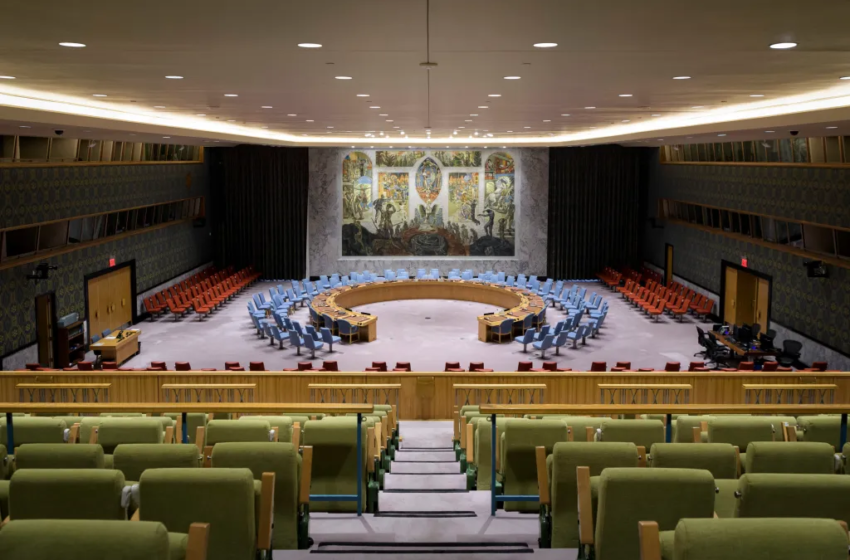
Power and principle at the heart of global governance: the UN Security Council and the limits of international order
Written by Chukwu. C. Ikechukwu
In my previous article, I argued that the international system is not, strictly speaking, a system governed by binding laws. While there have been attempts to develop rules, treaties, conventions, and norms that guide relations and interactions among states, compliance ultimately depends on states themselves. Leaders are expected to respect the agreements they willingly enter into and properly ratify through their domestic institutions, especially in democratic settings where legislatures play a formal role in ratification.
Perhaps the clearest warning that modern civilisation cannot indefinitely endure a chaotic and often violent international environment was the First World War and the chain of events that led to it. At the end of that conflict, the victorious Allied powers established the League of Nations to regulate interactions between states and prevent the outbreak of another war.
Although U.S. President Woodrow Wilson played a major role in the League’s formation, the United States ultimately did not join because Congress refused to ratify membership. This was the era of American isolationism, strengthened by the belief that geography insulated the country from global turmoil.
The League of Nations, however, failed to prevent the Second World War and the enormous human devastation that followed. Its collapse paved the way for the creation of the United Nations, an organisation whose name was first used by President Franklin D. Roosevelt, with the United States participating fully this time. The attack on Pearl Harbour, among other factors, reinforced the reality that global problems could not be managed in isolation and that major powers would have to act as partners, at least in principle.
One of the UN’s stated aims was to entrench the formal equality of states. In theory, regardless of size, wealth, population, or military strength, each state is recognised as equal under international law. Yet the UN also created a Security Council structure consisting of five permanent members with veto power and ten non-permanent members. This arrangement was designed to give the “Big Five” decisive influence on security matters and to ensure that the organisation did not embark on enforcement action without their consensus.
In practice, however, this “elegant” model has often prevented the UN from acting decisively when it matters most. The permanent members rarely agree, and many security questions have historically been interpreted through ideological lenses, particularly the rivalries of capitalism and communism. Even decades after the collapse of the Soviet Union and the fall of the Berlin Wall, the legacy of that divide continues to shape relations between East and West.
The negative effects of the veto system have encouraged major powers to resort to unilateral action or, at best, action taken with a limited coalition of allies, on issues they consider central to their national interests. In many such cases, they calculate that meaningful UN Security Council backing will never materialise.
Another enduring challenge, as noted previously, is enforcement. The UN has no standing police force or permanent army capable of implementing its decisions without depending on troop contributions from member states. In most instances, the burden of such contributions falls disproportionately on larger and more powerful states.
On sovereignty, although the principle is widely accepted in theory, it has repeatedly been violated with limited consequences, especially when major powers are involved.
To justify incidents like the one in Venezuela, powerful states often invoke a higher moral argument: liberating a population from a criminal or dictatorial regime, promoting democracy, and protecting human rights. Unfortunately, governments such as Maduro’s frequently play into this script through repression and poor governance, making even some citizens welcome external pressure or even regime change, while temporarily setting aside questions of sovereignty and national pride. After all, what does sovereignty mean to citizens whose rights, dignity, and security have been stripped away?
While we may rightly wish for a more orderly and principled international system, dictatorial regimes must recognise that they cannot forever hide behind concepts such as sovereignty and immunity as shields for abuses, whether against their own populations or in ways that threaten other states.
