
Uganda’s Election Disrupted by Technical Issues and Internet Shutdown
- Africa Politics Trending
 Otaria Benjamin
- 0
- 3 minutes read

Uganda’s President Yoweri Museveni, casts his vote during the general election. / Reuters
Voting in Uganda’s presidential and parliamentary elections was disrupted on Thursday by widespread technical glitches at polling stations and a nationwide internet blackout, both of which contributed to delays and frustration among voters, officials, and residents said.
In many parts of the country, biometric voter identification machines malfunctioned, preventing voters from being verified and delaying the start of voting at some polling locations. Ballot boxes were also reported to be undelivered in certain areas, adding to logistical challenges on election day.
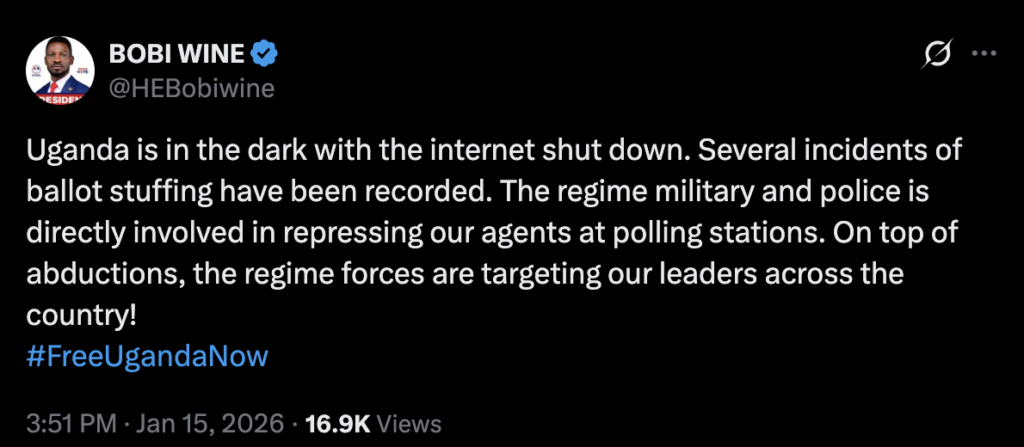
Opposition leader Bobi Wine, via his X (formerly Twitter) handle, accused security forces of interfering with the vote, alleging ballot stuffing, repression of opposition agents and arrests across the country. “Uganda is in the dark with the internet shut down,” he said, adding that military and police personnel were involved in actions at polling centres.
The government has defended the restrictions as a security measure, arguing that limiting online activity helps prevent the spread of misinformation and unrest during the vote. Officials have rejected claims of systematic interference and insist the election is being conducted in line with the law.
Rights organisations and election observers say the internet blackout has made independent verification difficult and raised concerns about transparency. Several groups reported delays in voting, heavy security presence and restricted movement in parts of the capital and other urban centres.
Uganda’s elections are taking place against the backdrop of long-standing political tensions and questions over succession, with President Yoweri Museveni seeking to extend his decades-long rule. Previous elections have been marred by violence, arrests of opposition supporters and limits on media and digital freedoms.
As counting begins, attention is focused on whether authorities will restore connectivity and how competing claims from the government and opposition will shape acceptance of the outcome.
