
A World Ruled by Might

Written by Chukwu C. Ikechukwu
I have read and heard many commentators for and against what they term violations of international laws, especially as it concerns the sovereignty of nations/states and the rendition/abduction of a Head of State.
If one considers the many years of effort to create an orderly international system as against the chaotic system that long characterized the world, a system where might is right, a system where “morality” rather than rules or laws governed, a system not of universally agreed and implemented morality, but one of shifting morality and at times no morals at all, then it would be easy, not just to cry against the “violation of international law(s),” but to also pretend that history has not taught us this and many similar and not so similar incidents have happened previously without any known sanction(s) or judicial ruling worthy of violation of law(s), of course except for lengthy international speeches that never undid the perceived wrong nor concrete step(s) taken to avoid future occurrence. Of course, the few exceptions are when a lesser power is involved.
A notable example in recent history is Saddam Hussein’s Iraqi invasion of Kuwait and the swift response from the global community led by the USA, the allied nations and of course the UNO (United Nations Organisation).
However, the Russian invasion of Ukraine in the 21st century has witnessed more condemnation than what we saw in Kuwait. Here, the reason is simple: Putin’s Russia is not the kind of bully you chase away without proper planning. Moreover, the one state (the USA) that can effectively stand up to Russia has other agendas as it concerns international engagement, even with properly entered and ratified multilateral agreements and treaties.
To be sure, it is these treaties and conventions that are referred to as international law. But when or if we consider that the international system, even the most notable supranational body, the UNO, has no independent means of enforcing the laws, except through the mercy and cooperation of member states, especially the big five (Britain/United Kingdom, China, France, Russia and the USA: the only truly Super Power for now) veto powers. To be sure, the UNO cannot act in any matter unless all five agree to the course of action. Hence, if the General Assembly, the other members of the Security Council—eleven—and four of these five permanent members of the Security Council agree to a course, no action will be taken because of that one veto. And if all five permanent members of the Security Council agree to a course, especially one that requires military action, the UN has no standing army or police, and would have to depend on the willingness of members to contribute troops for such an action.
As for the other agencies like the ICJ (International Court of Justice), ICC (International Criminal Court), and their regional equivalents, they also depend on the cooperation of member states (states that have signed the treaties and ratified such treaties through their local legislation) to effect an arrest, implement rulings and provide jailhouses for those convicted. Cases that readily come to mind are Charles Taylor of Liberia and Slobodan Milošević of the then Yugoslavia.
Having come thus far, it is imperative to state that more often than not, what determines the position states and statesmen take on international issues is not some utopian morality but national interest. Yes, in the international community, there is hardly a disinterested interest. More often than not, the morality of nations at the global stage is guided by their national interest in such nations. The nature of most national interests is that they run contrary to the interests of other states, hence the constant need for horse trading and diplomacy to reach a compromise and reduce conflicts. To be sure, at times, what passes for national interest would be a battle for supremacy and dominance, rather than an immediate economic gain for the state, her security, or that of its citizens. At other times, the ego of leaders has been erroneously passed off as national interest.
With the above, it is easy to see why it may be difficult to always have a universal definition of certain terms at all times. It is easy to see why a state that was against the invasion of Kuwait suddenly thinks it is ok for Russia to invade Ukraine. With the above, you understand why powerful nations ride roughshod over less powerful nations, and the global community does not do more than speeches and condemnations.
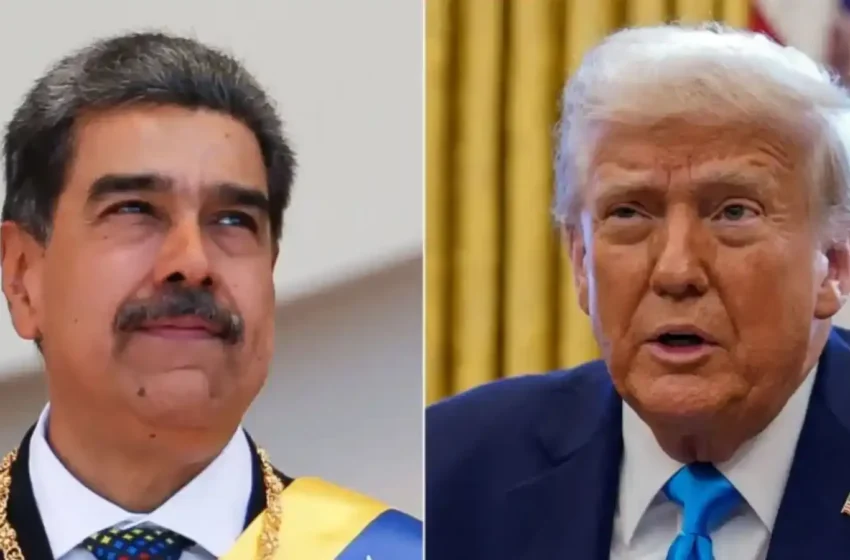
To be sure, the international community may continue in this manner until such a time that the supranational institutions would have in their possession the institutions that the states have and use for the implementation of their laws and enforcement of their sovereignty, until a superpower or leader who has no regard for the concept of sovereignty comes calling. Yeah, what happened in Venezuela with the Maduros is only a repeat of history. Yes, over three decades ago, on the same 3rd of January, Panamanian President Noriega was captured, taken to the USA, tried on the Miami indictment, convicted on most of the charges, sentenced to 40 years in prison, which was, however, reduced to seventeen years for good behaviour.
Also, it is important to note that, as it was in the case of Libya, Iraq, etc., the argument for many within the USA has always been about the process of acting, whether it was national interest or if it conforms to international law. For the Congress, it is about not being carried along and not necessarily the sovereignty of Venezuela or the innocence of Nicolás Maduro. Once these internal interests and politics are taken care of, the noise dies down.
