
Hormuz remains at near standstill after ceasefire
- Global News News
Favour Chikwesiri Michael
- 0
- 3 minutes read
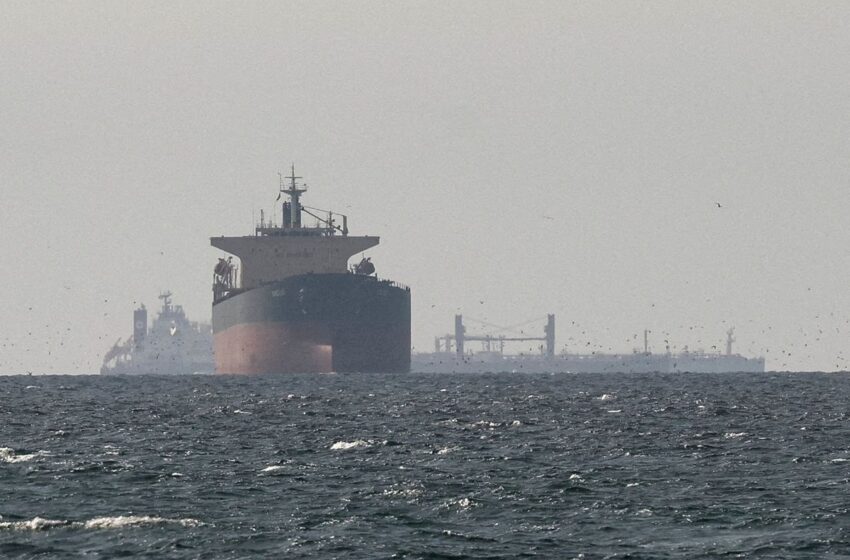
Cargo ships in the Gulf, near the Strait of Hormuz, as seen from northern Ras al-Khaimah, near the border with Oman’s Musandam governance, amid the U.S.-Israeli conflict with Iran, in United Arab Emirates, March 11, 2026. REUTERS
Ship traffic through the Strait of Hormuz remained well below normal volumes despite a U.S.-Iran ceasefire as Tehran asserted its control by warning ships to keep to its territorial waters while doing so.
According to ship tracking data from Kpler, just 15 ships had entered or exited the strait since the ceasefire was announced on April 8. Before the U.S. and Israeli campaign began, 138 ships passed through the strait on average.
Hundreds of tankers and other ships have been stuck inside the Gulf since the Iran war began on Feb 28, cutting global oil supply by 20% in the world’s biggest-ever supply disruption. The war has also damaged Gulf energy production and boosted oil prices by about 50%, with Asian buyers among the hardest hit.
On Thursday, Iran’s Islamic Revolutionary Guard Corps also set forth a special route for vessels to follow, warning them to sail through Iranian waters around Larak Island to avoid the risk of naval mines in a restricted area encompassing the usual lanes through the strait, Iran’s semi-official Tasnim news agency reported.
Vessels are to enter the strait north of Larak Island and exit just south of it until further notice in coordination with the IRGC’s navy, Tasnim quoted the IRGC as saying.
Risks persist for ships not authorised by Iran, particularly those affiliated with Israel and the U.S., British maritime security company Ambrey said in an advisory. “Even shipping with apparent approval has been turned back in recent weeks mid-transit,” it said.
Media reports have suggested that Iran might want to charge a toll for ships passing through, some pinning the figure at $2 million, and ship-tracking data has shown some vessels are already taking the unusual route around Larak Island.
Western leaders have pushed back on the idea of paying any such fees.
U.S. President Donald Trump warned Tehran not to charge tolls on ships crossing the Strait of Hormuz, as a mounting global energy crisis prompted Japan on Friday to announce a further emergency oil release.
Part of the two-week ceasefire announced on April 7, after weeks of attacks damaging energy infrastructure across the Gulf, included opening the strait at the southern tip to free hundreds of stranded tankers and other vessels.
