
Israel kills Iran’s intelligence minister Esmail Khatib
- Global News News
Favour Chikwesiri Michael
- 0
- 3 minutes read
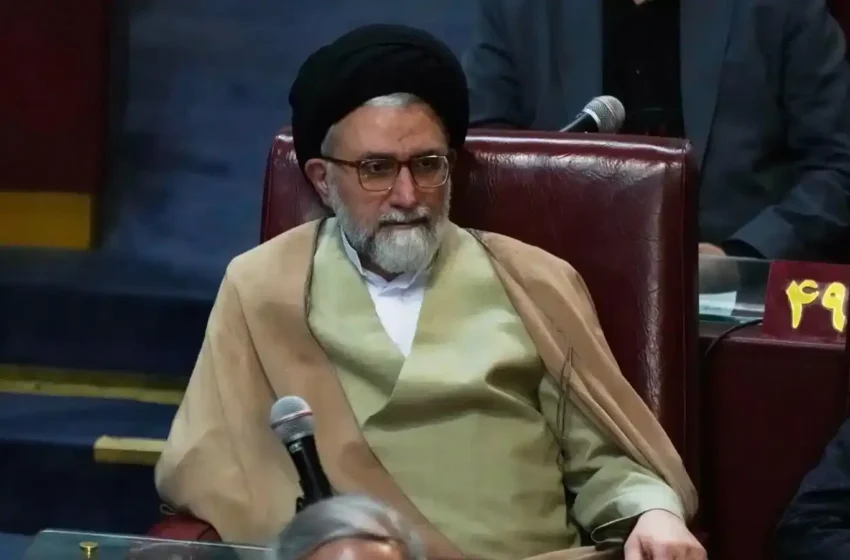
Israel has killed Iranian Intelligence Minister Esmail Khatib, Israeli Defence Minister Israel Katz announced on Wednesday.
As of the time of filing this report, Iran has yet to speak on Israel’s claim of killing Khatib.
The killing follows Israel’s announcement Tuesday that it killed top Iranian security chief Ali Larijani and the head of the paramilitary Revolutionary Guard’s all-volunteer Basij force.
Katz said “significant surprises are expected throughout this day on all the fronts,” without providing details.
It was learnt that the US Treasury sanctioned Khatib in 2022 over the Intelligence Ministry “engaging in cyber-enabled activities against the United States and its allies.” The Treasury also listed his birth year as either 1960 or 1961.
The Treasury said Khatib “directs several networks of cyber threat actors involved in cyber espionage and ransomware attacks in support of Iran’s political goals.”
The Israeli military announced the killing and described the Intelligence Ministry as having “advanced intelligence capabilities” and conducting operations worldwide, including those against Israel.
“Khatib played a significant role during the recent protests throughout Iran, both with regards to the arrest and killing of protestors as well as shaping the regime’s intelligence assessment. Similarly, he operated against Iranian citizens during the Mahsa Amini protests,” the Israeli military said.
The Treasury called Iran’s Intelligence Ministry “one of the Iranian government’s main security services which is responsible for serious human rights abuses.”
“Under his leadership, the Intelligence Ministry has cracked down on a large number of human rights defenders, women-rights activists, journalists, filmmakers, and members of religious minority groups,” the Treasury stated.
Khatib was a Shiite cleric who worked in various positions in Iran’s judiciary and the Intelligence Ministry. He served in the Revolutionary Guard during the Iran-Iraq War in the 1980s and was wounded in combat.
