
Toyota’s boss Sato is stepping down and will be succeeded by finance chief Kenta Kon.
- Global News
Favour Chikwesiri Michael
- 0
- 4 minutes read
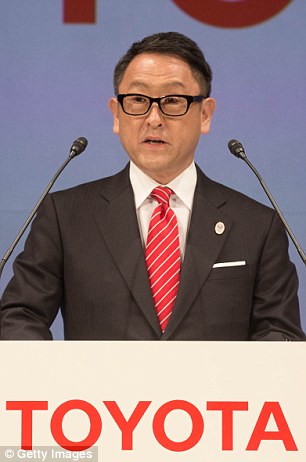
Toyota Chief Executive Koji Sato will step down after just three years at the helm of the world’s largest automaker, the company said on Friday, to be replaced by chief financial officer Kenta Kon.
The reshuffle, which will see Sato step into the role of vice chairman and chief industry officer, comes as the automaker faces growing scrutiny over its planned buyout of forklift subsidiary Toyota Industries—a deal that minority investors have slammed for lacking transparency and being significantly undervalued.
The management change was not widely expected. Toyota made the announcement together with the release of its third-quarter earnings, where it boosted its outlook for full-year profit by almost 12%, helped by a weaker yen and cost-cutting efforts.
In their new roles, Kon will handle internal company management, while Sato will concentrate on the broader industry—moves aimed at speeding up decision-making as Chinese competitors shake up the auto business at a rapid pace.
James Hong, head of mobility research at Macquarie, said that while product has always been the top priority for Toyota, the change likely reflected the automaker’s awareness of the many more decisions to be made around the non-automotive businesses.
“Kon, I think he basically has more experience dealing with the financial issues of the company than Sato-san, who basically came from the product development side,” he said, noting that Kon was seen as the “mastermind” behind the buyout.
Kon told a press conference he was surprised when he was first approached about the job in the middle of last month.
At present, Kon is also in charge of finances at mobility technology subsidiary, Woven by Toyota, a background that is likely to prove helpful as Toyota tries to close the software gap with Chinese rivals.
Sato took over the top job from Akio Toyoda, the founder’s grandson, in April 2023, at a time when Toyota was under fierce pressure over its laggard approach to battery EVs.
The automaker’s contrarian bet on gasoline-electric hybrids has proved prescient, and helped underpin years of record sales, including last year when Toyota retained its crown as the world’s top seller.
During Sato’s tenure, Toyota’s shares advanced 111%, including dividends, outperforming a rough doubling in the benchmark Nikkei over the same period.
Yet Toyota also lost some market share during that time to more nimble Chinese rivals such as BYD ( in regions like Southeast Asia. It has also been dogged by criticism over governance, most recently around the Toyota Industries buyout.
