
Vance Warns Iran Not To ‘Play’ US At Talks In Pakistan
- Global News News
Favour Chikwesiri Michael
- 0
- 8 minutes read
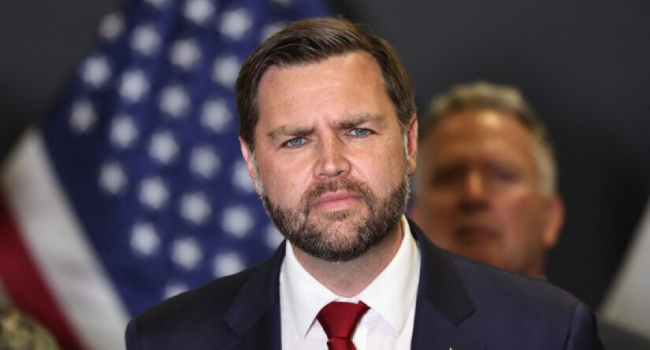
US Vice President JD Vance listens to a question during a press conference following a military briefing at the Civilian Military Coordination Center in southern Israel on October 21, 2025. Vance is expected to meet top US Middle East envoys and military experts monitoring the fragile US-brokered ceasefire in Gaza. According to Israeli media reports, he will also meet Israeli leaders, including the Israeli prime minister on October 22 in Jerusalem. (Photo by Fadel SENNA / AFP)
US Vice President JD Vance warned Iran on Friday against trying to “play” Washington, as he set off for talks in Islamabad aimed at transforming a fragile ceasefire into a lasting peace deal.
Despite the temporary truce struck between the foes, deep disagreements remain as to the way forward, and both sides have accused the other of failing to properly implement the current agreement.
But “if they’re going to try to play us, then they’re going to find the negotiating team is not that receptive”, he said.
Since the ceasefire took effect, US President Donald Trump has voiced displeasure at Iran’s handling of the strategic Strait of Hormuz, which was meant to be reopened, while Tehran has reacted angrily to Israeli attacks in Lebanon, insisting that it too falls under the agreement.
Official sources say the talks in Islamabad will cover several sensitive points, including Iran’s nuclear enrichment and the free flow of trade through the strait.
While Pakistan had said the discussions would start on Friday, Vance is not expected to arrive until Saturday.
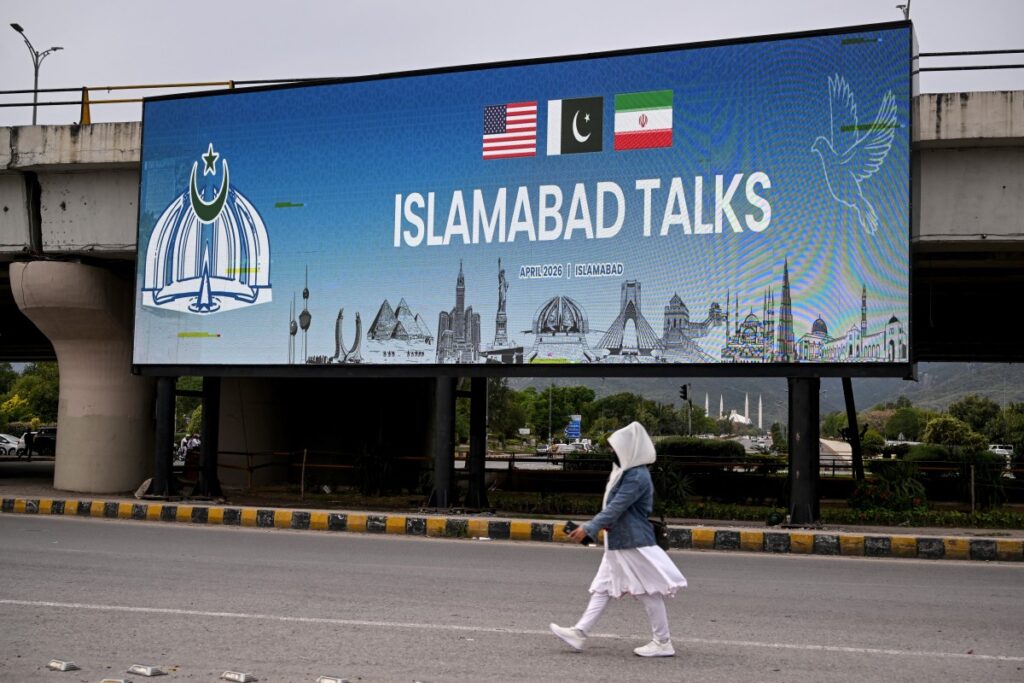
Late Friday evening, all routes leading to the Serena Hotel, the expected venue, were blocked off with heavy security, while a large banner and digital signs along the expressway heralded the “Islamabad Talks”.
Iran has suggested that its participation could hinge on a halt to Israeli attacks on Lebanon: “The holding of talks to end the war is dependent on the US adhering to its ceasefire commitments on all fronts, especially in Lebanon,” said Esmaeil Baqaei, Iran’s foreign ministry spokesman.
Iranian officials have said the Israeli strikes had rendered the Pakistan talks “meaningless”.
Nevertheless, Iran’s powerful Revolutionary Guards signalled they were committing to the ceasefire and had “not launched anything at any country”, according to the state broadcaster.
In a barrage of social media posts that sparked fears for the shaky truce, Trump on Thursday accused Iran of doing a “very poor job” of allowing oil through the Strait of Hormuz and of breaching the terms of their ceasefire agreement.
But Vance, who is leading the US delegation alongside special envoy Steve Witkoff and Trump’s son-in-law Jared Kushner, told reporters: “We’re going to try to have a positive negotiation.”
One 30-year-old resident of Tehran told AFP he was sceptical negotiations would be successful, describing most of what Trump says as “pure noise and nonsense”.
“He wants to manipulate the Islamic Republic into getting a deal. I think that was his intention, if you can say there is an intention.”

A fifth of the world’s oil and vast quantities of natural gas and fertiliser pass through the Strait of Hormuz in peacetime, but only a small number of vessels have crossed since the truce was announced earlier this week.
The two-week ceasefire was agreed to allow time for negotiations aimed at ending a conflict that has already killed thousands and plunged the global economy into turmoil.
“I am scared of the war starting again, and at the same time I’m scared of the regime staying,” Tehran resident Sheida told AFP, withholding her last name out of concern for her safety.
Hezbollah announced on Friday that it had targeted Israel’s Ashdod naval base with missiles “in response to the enemy’s violation of the ceasefire and its repeated attacks on Beirut”.
On Wednesday Israel carried out its heaviest strikes on Lebanon since Iran-backed Hezbollah entered the Middle East war, killing more than 300 people.
Afterwards, Trump told NBC News that Israel was “scaling back” strikes in Lebanon and that Prime Minister Benjamin Netanyahu had assured him its attacks would become more “low-key”.
A Western diplomat said on condition of anonymity that there was ongoing “pressure from European states, Gulf states and Egypt on Israel to prevent renewed Israeli airstrikes on Beirut after ‘Black Wednesday’”.
As of Friday afternoon, the Israeli army had not acted on warnings the day before that it would strike wide areas in Beirut’s south.
It did, however, carry out a strike near a government building in the southern city of Nabatiyeh that killed eight security personnel, Lebanon state media said.
Israel’s army, meanwhile, reported that more than 4,300 Hezbollah sites had been “dismantled” in Lebanon since the start of the war.
Washington has said the Lebanese front will be dealt with under separate talks next week, although neither Israel nor the Lebanese government have publicly confirmed these talks.
The UN’s World Food Programme (WFP) warned Friday that food insecurity was on the rise in Lebanon with prices surging and supply chains disrupted.
