
Egypt’s President Rejects Foreign Interference
- Africa Global News
 Olalekan Rasak
- 0
- 4 minutes read
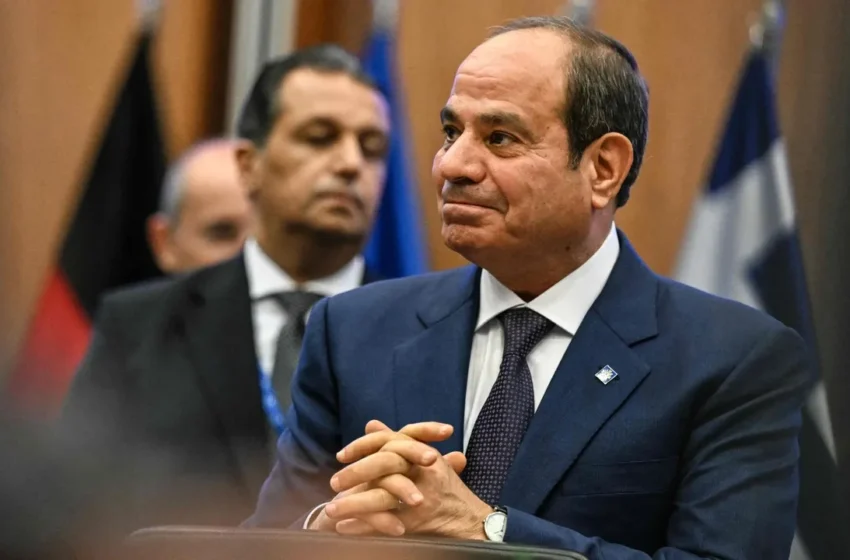
Egyptian President Abdel Fattah Al-Sisi has rejected foreign interference in African affairs and called for greater cooperation among countries sharing transboundary rivers, amid tensions with Ethiopia.
Speaking on Sunday at the opening of the African Union’s eighth Mid-Year Coordination Meeting in New Alamein, Al-Sisi said relations between African countries should be based on mutual respect, good neighbourliness and respect for sovereignty.
He said African countries should move beyond unilateral policies and narrow interests, stressing that respect for national unity and territorial integrity was important for the continent’s stability.
“Egypt reaffirms its firm rejection of any external interference in the internal affairs of African states,” he said.
Al-Sisi also called for disputes involving shared natural resources and rivers to be addressed through dialogue and cooperation rather than confrontation.
He said the sustainable management of shared resources, particularly water, was an important test of African countries’ ability to work together. He added that every country had a right to development, but that such development should not harm other states.
“Egypt, given its location and the needs of its people, recognises the importance of the water issue,” he said, calling for cooperation on shared rivers based on international law, consultation, coordination and the principle of avoiding harm.
The remarks come amid a long-running dispute between Egypt, Sudan and Ethiopia over the Grand Ethiopian Renaissance Dam (GERD) on the Blue Nile. Egypt and Sudan have called for a legally binding agreement governing the dam’s filling and operation, while Ethiopia maintains that the project is intended to support its development and does not seek to harm downstream countries.
The Nile Basin includes 11 countries: Burundi, the Democratic Republic of Congo, Egypt, Eritrea, Ethiopia, Kenya, Rwanda, South Sudan, Sudan, Tanzania and Uganda.
Relations between Egypt and Ethiopia have also come under strain in recent days. Ethiopia expelled an Egyptian diplomat, prompting Cairo to take a reciprocal measure, while Ethiopia closed its embassy in Asmara and expelled 10 Eritrean diplomats. Eritrea subsequently severed diplomatic relations with Ethiopia.
Ethiopia has accused Eritrea, Sudan and Egypt of supporting an opposition alliance led by the Tigray People’s Liberation Front, while Egypt has denied interfering in Ethiopia’s internal affairs.
Al-Sisi also called for stronger economic integration across Africa, urging countries to fully implement the African Continental Free Trade Area.
He said deeper integration could expand intra-African trade, support industrialisation and technology transfer, create jobs and develop production chains across the continent.
“Africa should not remain merely a supplier of raw materials that it later imports as finished products,” he said, calling for stronger manufacturing capacity and integrated value chains.
SOURCE: Anadolu Agency
