
First local vote in years offers gauge of Hamas popularity in Gaza
- Global News News
Favour Chikwesiri Michael
- 0
- 6 minutes read
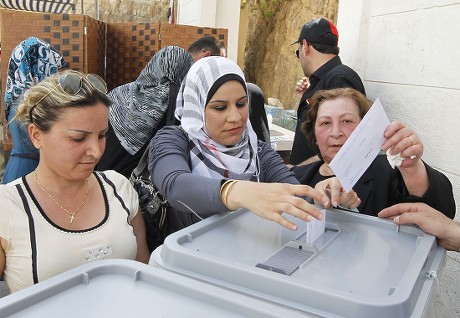
Image ref 53713461. Copyright Rex Shutterstock No reproduction without permission. Please see www.rexfeatures.com for more information.
In one of the few Gaza cities not taken over by Israeli ground forces during the war, Palestinians will head to the polls this weekend for municipal elections that include some pro-Hamas candidates, providing a rare glimpse into the militant group’s popularity.
The vote in Deir al-Balah is part of the Palestinian Authority’s municipal elections, which many Palestinians see as a show of national unity against a U.S. plan for Gaza they believe aims to deepen its separation from the occupied West Bank.
It will be Gaza’s first vote of any kind since 2006, when Hamas won the PA’s legislative elections and later seized control of Gaza following a brief civil war with PA President Mahmoud Abbas’ Fatah party, dominant in the West Bank.
The upcoming polls will mark the fifth municipal elections in the West Bank since 2005. Back in January, the PA announced plans to extend the elections to Gaza “wherever possible,” a move analysts view as a symbolic gesture to affirm that Gaza is still considered part of a future Palestinian state.
“For the first time in my life, in 20 years, I will have this feeling. I have been hearing about elections since I was born but because of the circumstances no elections are done,” said Al-Bardini, 34.
“We are eager to take (part) so we can change the reality imposed on us.”
In Deir al‑Balah, large banners bearing the logos of rival candidate lists decorate the streets. Voting will be held in 12 polling centres including open fields and tents.
Fareed Taamallah, spokesman for the PA Central Elections Commission, said roughly 70,000 Palestinians were eligible to vote in Deir al‑Balah, a city he said was chosen because it suffered less damage than the rest of the largely ruined territory.
Four lists are fielding candidates in the election, including one that has several candidates who residents and analysts regard as pro-Hamas.
Hamas has not explicitly fielded a list or endorsed any candidate, citing disagreements with Abbas over a PA decree that requires candidates to accept terms including recognition of Israel. Other factions are also boycotting the vote, meaning Fatah is expected to sweep larger city councils in the West Bank.
But despite its official boycott of the vote, Hamas “may be betting on winning in this election” and could use pro-Hamas candidates’ performance to gauge its popularity, said Hani Al-Masri, a West Bank political analyst.
Hamas spokesperson Hazem Qassem said the group would respect the election results. Sources in the group told Reuters that it will deploy police and security forces to secure voting sites.
Hamas regained control of Deir al-Balah and other parts of Gaza’s coastline after Israeli forces pulled out following the October 2025 ceasefire. Israel still holds over 53% of Gaza.
Some public opinion polling shows Hamas remains popular in Gaza and the West Bank, despite the devastation wrought by the war. In Gaza, an October 2025 poll by the Palestinian Center for Policy and Survey Research found that 41% of Palestinians there support Hamas, followed by 29% for Fatah.
The vote comes as U.S. President Donald Trump’s so-called “Board of Peace” promotes a plan for Gaza’s future that envisions rebuilding the territory from the ground up, overseen by an impartial committee of Palestinian technocrats.
The plan proposes that Hamas hand over governance of Gaza to the committee, lay down its weapons, and see Israeli forces withdraw from the Strip. So far, Hamas has refused to disarm, accusing Israel of not honoring the October ceasefire.
The plan notably does not mention the West Bank, which, along with the Gaza Strip, Palestinians have long sought for a future state, and where the PA exercises limited self-rule.
Palestinian political analyst Reham Owda said the municipal elections were “a symbolic step to send a message to the world, to the Board of Peace, and to Israel that the Gaza Strip is an inseparable part of the Palestinian political system.”
For 25-year-old Abdul-Rahman Al-Shaaf, the vote, even at the local level, offers an opportunity to rebuild lives after conflict.
“Everyone wants to improve the country, especially after two years of war, what we witnessed, and the destruction,” he said.
