
South Africa identifies rare hantavirus strain from cruise ship outbreak
- Africa News
 Otaria Benjamin
- 0
- 3 minutes read
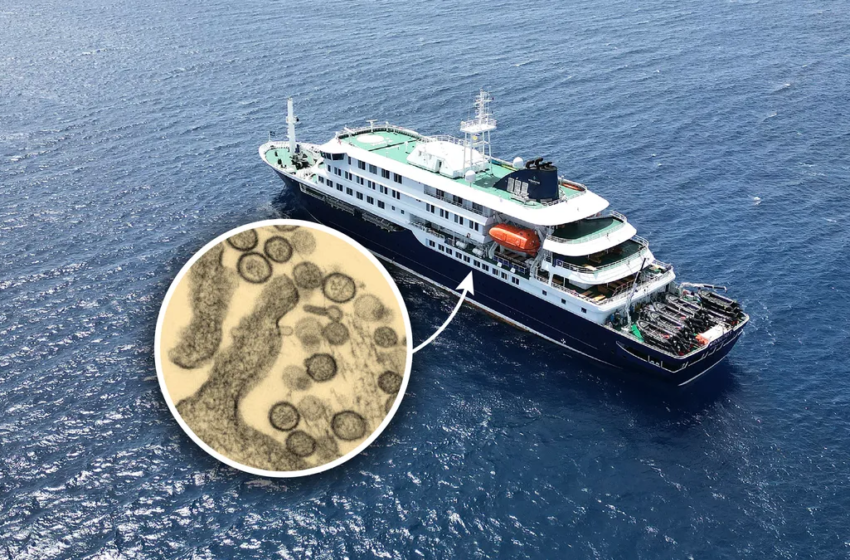
Health experts warn that hantavirus, a rodent-borne disease, can cause severe respiratory illness. / AP
South Africa has identified the Andes strain of hantavirus in two people who came off a cruise ship hit by an outbreak of the disease, according to a health minister’s presentation to parliament on Wednesday.
The Andes strain is rare because it can spread from human to human. Other strains are typically transmitted through contact with infected rodents or their droppings.
The outbreak occurred on the MV Hondius, a polar expedition vessel operated by Oceanwide Expeditions. The ship is currently stationed off Cape Verde.
The cruise departed from Argentina about three weeks ago with approximately 150 passengers. It travelled through Antarctica and other remote regions before heading toward West Africa.
The World Health Organisation said it has begun tracing people on a flight between Saint Helena and Johannesburg. A Dutch woman, whose husband died of the virus on the ship, disembarked in Saint Helena with symptoms on April 24. Her condition deteriorated during the flight, and she died on April 26.
Around 150 people remain on the Hondius. Most passengers are British, American and Spanish. The seven cases linked to the virus include three deaths, one critically ill person, and three people with mild symptoms, the WHO said.
Hantavirus typically spreads when particles from rodent urine or droppings become airborne. Human-to-human transmission is rare but possible. The illness usually begins with flu-like symptoms but can rapidly escalate to heart and lung failure.
The virus has a fatality rate of about 40 per cent, according to the US Centres for Disease Control and Prevention.
SOURCE: Reuters
