
Trump kickstarts ‘Project Freedom’ in Strait of Hormuz
- Global News News
Favour Chikwesiri Michael
- 0
- 4 minutes read
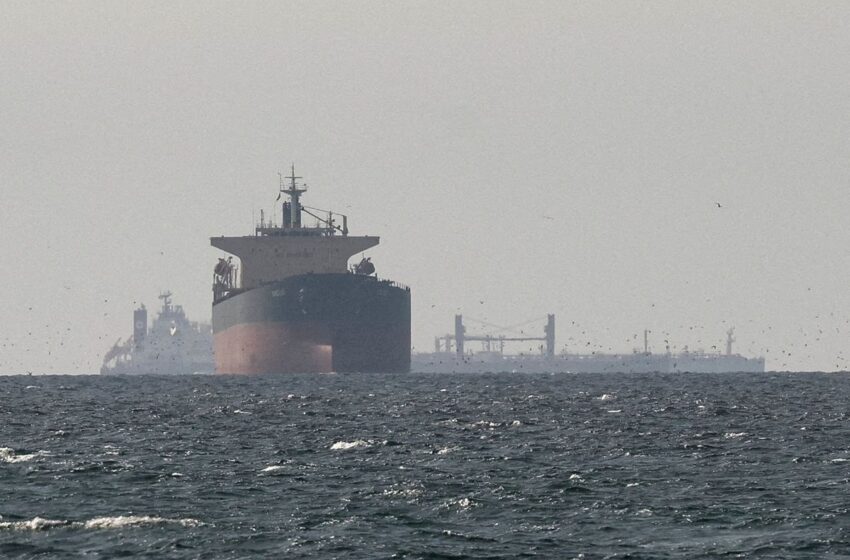
Cargo ships in the Gulf, near the Strait of Hormuz, as seen from northern Ras al-Khaimah, near the border with Oman’s Musandam governance, amid the U.S.-Israeli conflict with Iran, in United Arab Emirates, March 11, 2026. REUTERS
President Donald Trump has announced the US will help “guide” ships that have been stranded by Iran’s closure of the Strait of Hormuz.
The Strait has remained largely blocked since the US and Israel launched air strikes on Iran – and Tehran responded by blocking the crucial waterway through which 20% of the world’s oil and liquefied natural gas is meant to pass freely.
The day after the announcement, limited fighting appeared to have resumed, with the US saying it had struck several Iranian small boats and Iran reportedly launching a series of attacks of its own.
What does Trump’s “Project Freedom” entail and could it lead to a wider resumption of hostilities?
In a post on his Truth Social platform on Sunday, the president said the US had been asked by countries “from all over the World” to help free up their ships which were “locked up in the Strait of Hormuz” and were “merely neutral and innocent bystanders!”.
And so, in response, the US would “guide their Ships safely out of these restricted Waterways”.
“The Ship movement is merely meant to free up people, companies, and Countries that have done absolutely nothing wrong — They are victims of circumstance,” Trump said.
He added this was “a Humanitarian gesture on behalf of the United States, Middle Eastern Countries but, in particular, the Country of Iran” – as many of these vessels were “running low on food, and everything else necessary for largescale crews to stay on board in a healthy and sanitary manner”.
Trump’s announcement made it sound like Iran was a party to the operation – the president went as far as to say “Project Freedom” was being undertaken on behalf of Iran, too.
But Iran maintains it has full control of the Strait and threatened to attack “any foreign armed force” that tried to approach or enter, “especially, the aggressive US army”.
Maj Gen Ali Abdollahi said safe passage through it must be co-ordinated with Iran “under all circumstances”.
A day later, on Tuesday, Iran’s Foreign Minister Abbas Araghchi said “events in Hormuz make clear that there’s no military solution to a political crisis”.
“Project Freedom is Project Deadlock,” he wrote on X.
