
TUC urges subsidy for Dangote, modular refineries to lower fuel costs
- Africa Global News News
Favour Chikwesiri Michael
- 0
- 4 minutes read
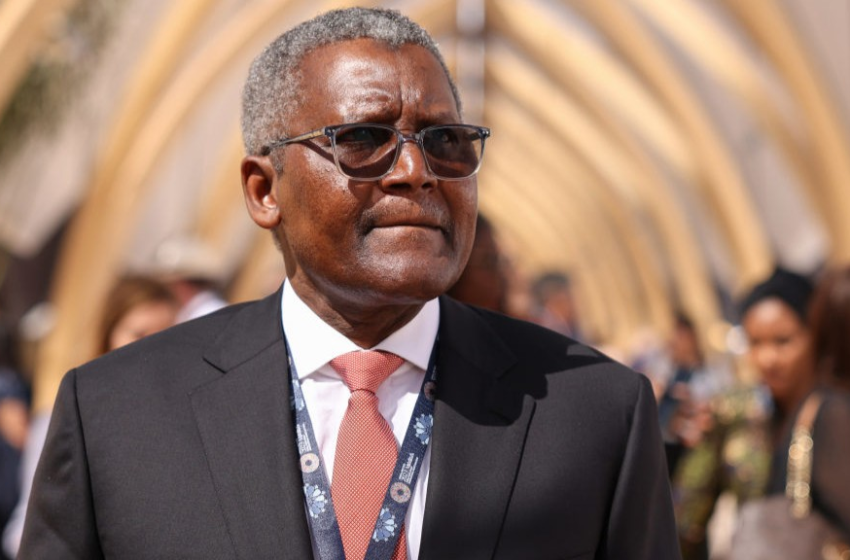
Nigerian billionaire Aliko Dangote was in Kenya for a summit on April 23, 2026. / Reuters
Nigeria’s National Security Adviser, Nuhu Ribadu, has held talks with senior United States government officials on counterterrorism, defence cooperation, and regional security.
Ribadu undertook a three-day working visit to the US from May 4 to 6, during which he met with Vice President J. D. Vance and Secretary of State Marco Rubio, who also serves as Acting National Security Adviser.
He also met with Undersecretary for Political Affairs Allison Hooker and Assistant Secretary of War Daniel Zimmerim during the visit.
A statement by the Special Adviser to the President on Information and Strategy, Bayo Onanuga on Saturday, said Ribadu conveyed the president’s commitment to the bilateral relationship during the engagements.
He outlined the TUC’s proposal, focusing on redirecting excess oil revenue to support local refining.
Osifo queried, “So, what we proposed, knowing and understanding that they wouldn’t want to bring consumption subsidy, we were advocating for a production subsidy.
“Production subsidy, in that today we have modular refineries, right?
“So we were advocating that this extra $35, for example, that you are making per barrel, why don’t you take half of it, for example, and use it to subsidise the crude that you are giving to Dangote Refinery and the modular refineries so that they will be able to produce cheaper PMS?”
Petrol prices have surged significantly in recent weeks, rising from about ₦800 to around ₦1,300 depending on location, following the outbreak of the US/Israel-Iran War.
Despite mounting pressure to reinstate fuel subsidies, which were removed when Bola Tinubu assumed office in May 2023, the Federal Government has maintained its stance against the policy.
On Tuesday in Paris, Nigeria’s Coordinating Minister of the Economy and Minister of Finance, Taiwo Oyedele, said the Federal Government won’t bring back subsidies or set price controls, reinforcing its commitment to market-driven economic reforms.
“We will not bring back fuel subsidy because it creates distortions for the economy, and we won’t introduce price control because we believe in the market… the situation in Iran presents new opportunities for us as the world looks to diversify sources of energy and invest in new markets,” said Oyedele.
Osifo, however, urged the government to explore creative solutions to support citizens amid rising living costs.
But Osifo wants the government to “think out of the box and quickly do things to assist its citizens”.
