
Nigeria and South Africa seek to ease tensions over xenophobic attacks
- Africa Global News
Favour Chikwesiri Michael
- 0
- 4 minutes read
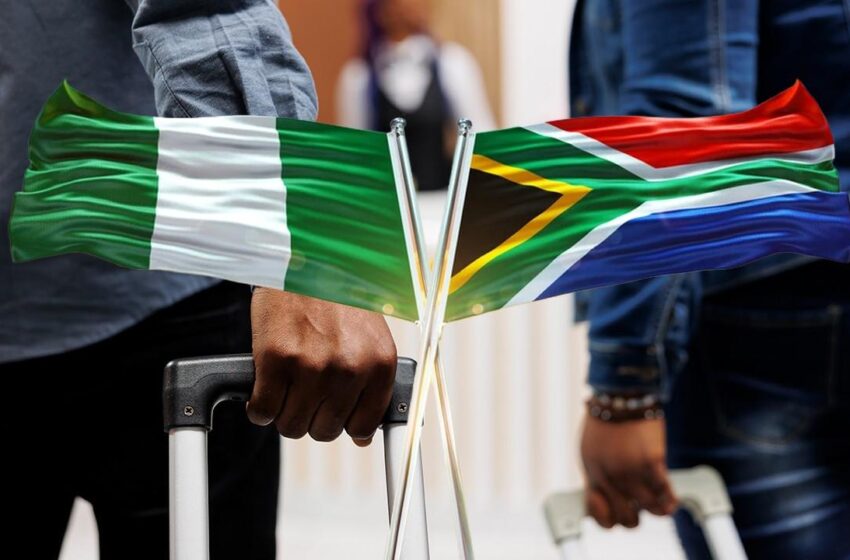
Nigeria said South Africa had agreed to bring to justice those responsible for attacks on foreign nationals, while Abuja was compiling compensation claims for losses suffered by Nigerians as both countries pledged to tone down rhetoric over the violence.
The commitments came after talks in Abuja on Monday between Nigeria’s Minister of State for Foreign Affairs, Sola Enikanolaiye, and South Africa’s International Relations Minister, Ronald Lamola, aimed at easing tensions following attacks on Nigerian nationals in South Africa.
South African vigilante groups have repeatedly targeted foreign African nationals and looted migrant-owned businesses in recent months. In June, anti-immigrant protesters took to the streets in several cities, demanding that undocumented migrants leave the country.
Nigeria brought back around 1,490 of its citizens after the unrest, according to a statement from the foreign ministry on July 16.
The violence has reignited a longstanding source of friction between Africa’s two biggest economies.
“We agreed that we should de-escalate the tension that had erupted between our two countries and our people,” Enikanolaiye said after the talks, adding that both sides would lower the temperature of public discourse and preserve ties built through decades of cooperation
He said South Africa had assured Nigeria that perpetrators of the attacks would be prosecuted and that Abuja was compiling claims for property losses suffered by Nigerians that could form the basis of future compensation discussions.
Nigeria also sought stronger safeguards for its citizens, including an early warning system, increased police protection in violence-prone areas and accountability for those behind the attacks, he said.
Lamola said the South African government condemned “all forms of xenophobia” and stressed that no individual had the right to take the law into their own hands.
“The protest and the violence that is happening is not state-sponsored, it is not condoned by the South African government,” he said.
Lamola said Pretoria remained concerned about criminal activities allegedly involving some Nigerian nationals, including drug trafficking and cybercrime, while stressing that such offences should be addressed through the legal system rather than vigilante action.
“We have agreed that all issues of criminality must be dealt with in terms of the law,” he said, adding that authorities were pursuing arrests and prosecutions linked to the violence.
